Whether you’re scrolling through fashion magazines or standing in a fitting room, one question keeps coming up: how do I dress for my body type? The answer isn’t about hiding yourself — it’s about understanding your proportions and choosing clothing that celebrates your shape. This guide walks you through exactly how to dress for body type, so you can walk out the door feeling confident every single day.
Why Dressing for Your Body Type Matters
Learning how to dress for your body type is one of the most powerful style skills you can develop. It’s not about conforming to trends or fitting a mold — it’s about wearing clothes that fit you, not the other way around. When your outfit works with your proportions, you naturally look more polished, feel more comfortable, and project confidence.
The goal is balance: creating the illusion of an evenly proportioned silhouette, no matter what you’re starting with.
The Main Body Types (and How to Identify Yours)
Before you can master how to dress for your body type, you need to identify your shape. Most style experts categorize body types into five classic silhouettes:
1. Hourglass Body Type
Shape: Bust and hips are roughly equal in width, with a clearly defined, narrow waist.
How to dress for an hourglass body type:
- Wrap dresses and fit-and-flare styles are your best friends — they naturally follow your curves.
- Belted pieces at the waist highlight your narrowest point.
- Bodycon fits work well because they trace your natural silhouette.
- Avoid boxy, shapeless clothing that conceals your natural waist.
- High-waisted bottoms paired with tucked-in tops keep the emphasis on your proportions.
Key principle: Define the waist. Everything else follows beautifully.
2. Pear (Triangle) Body Type
Shape: Hips are wider than the shoulders, with a narrower upper body.
How to dress for a pear body type:
- Draw attention upward with bold necklines, structured shoulders, and statement tops.
- A-line skirts and bootcut jeans balance the hip-to-shoulder ratio.
- Darker colors on the bottom and brighter tones or patterns on top create visual balance.
- Avoid tapered pants, skinny jeans with wide tops, or anything that adds volume to the hip area.
- Embellished, ruffled, or patterned tops add width to the upper body naturally.
Key principle: Build up the top half to create shoulder-to-hip symmetry.
3. Apple (Inverted Triangle or Round) Body Type
Shape: Broader through the shoulders and midsection, with slimmer hips and legs.
How to dress for an apple body type:
- Empire waist and A-line dresses skim the midsection without clinging.
- V-necks and deep necklines elongate the torso.
- Flowy tops worn over slim-fitting bottoms create a long, vertical line.
- Avoid high-waisted anything that draws attention directly to the midsection.
- Draw attention downward with patterned or wide-leg trousers.
Key principle: Elongate the torso and shift focus to your legs and décolletage.
4. Rectangle (Straight) Body Type
Shape: Shoulders, waist, and hips are roughly the same width, with little curve definition.
How to dress for a rectangle body type:
- Create the illusion of curves with peplum tops, ruffle details, or belted waists.
- Crop tops paired with high-waisted skirts suggest a defined waist.
- Structured blazers and tailored jackets add shape.
- Layering adds dimension — a cardigan over a fitted top, or a vest over a shirt.
- Avoid straight, unstructured dresses that emphasize the uniform silhouette.
Key principle: Add curves through layering, belts, and strategic volume.
5. Inverted Triangle Body Type
Shape: Broad shoulders and chest with narrower hips.
How to dress for an inverted triangle body type:
- Wide-leg trousers, flared jeans, and A-line skirts add volume below the waist.
- Boat necks and wide necklines should be avoided — instead, opt for V-necks or scoop necks that minimize shoulder width.
- Ruffled skirts, pleated bottoms, and wrap skirts build out the hip area.
- Simple, understated tops let the eye move downward.
Key principle: Build volume at the hips and minimize attention at the shoulders.
Universal Tips for Dressing for Any Body Type
No matter your shape, these principles apply to everyone learning how to dress for body type:
Fit Is Everything
Clothes that fit properly always look better than clothes that are the “right” size on a label but don’t fit your body. Invest in a good tailor — even small adjustments make a dramatic difference.
Vertical Lines Elongate
Pinstripes, long cardigans, and monochromatic outfits (top to bottom in the same color) create a long, lean visual line, which is universally flattering.
Know Your Proportions
Short-waisted? Wear high-waisted bottoms and cropped tops to lengthen the torso. Long-waisted? Low-rise jeans and longer tops balance the proportions.
Fabric Matters
Heavy, stiff fabrics add bulk. Lightweight, drapey fabrics follow your shape without adding volume. Choose fabric weight based on where you want to minimize or add.
Underwear Is Part of the Outfit
The right undergarments create a smooth foundation. A well-fitted bra, for example, changes the entire silhouette of an outfit.
How to Dress for Body Type: Men’s Edition
The same principles apply to men:
- Rectangle (most common): Layering (jackets, vests) and structured shoulders add dimension. Slim-fit clothes define shape better than loose cuts.
- Oval (rounded midsection): Vertical stripes, longer shirts worn untucked, and darker colors on top elongate the torso.
- Triangle (narrow shoulders, wider hips): Structured shoulder jackets balance the silhouette; avoid low-rise jeans that emphasize the hips.
- Inverted Triangle (broad shoulders, narrow hips): Avoid very tight shirts across the chest; slim-fit trousers balance the look.
Common Mistakes When Dressing for Your Body Type
- Wearing clothes that are too big to “hide” your body — oversized clothes often add perceived volume rather than reducing it.
- Ignoring the waist entirely — a defined waist is universally flattering for most body types.
- Choosing trends over fit — not every trend works for every shape, and that’s perfectly fine.
- Forgetting about shoes — shoe choice affects perceived leg length significantly. Nude shoes elongate the leg; ankle straps can shorten it.
- Not accounting for height — petite frames are overwhelmed by oversized prints; tall frames can carry large patterns with ease.
Building a Wardrobe Around Your Body Type
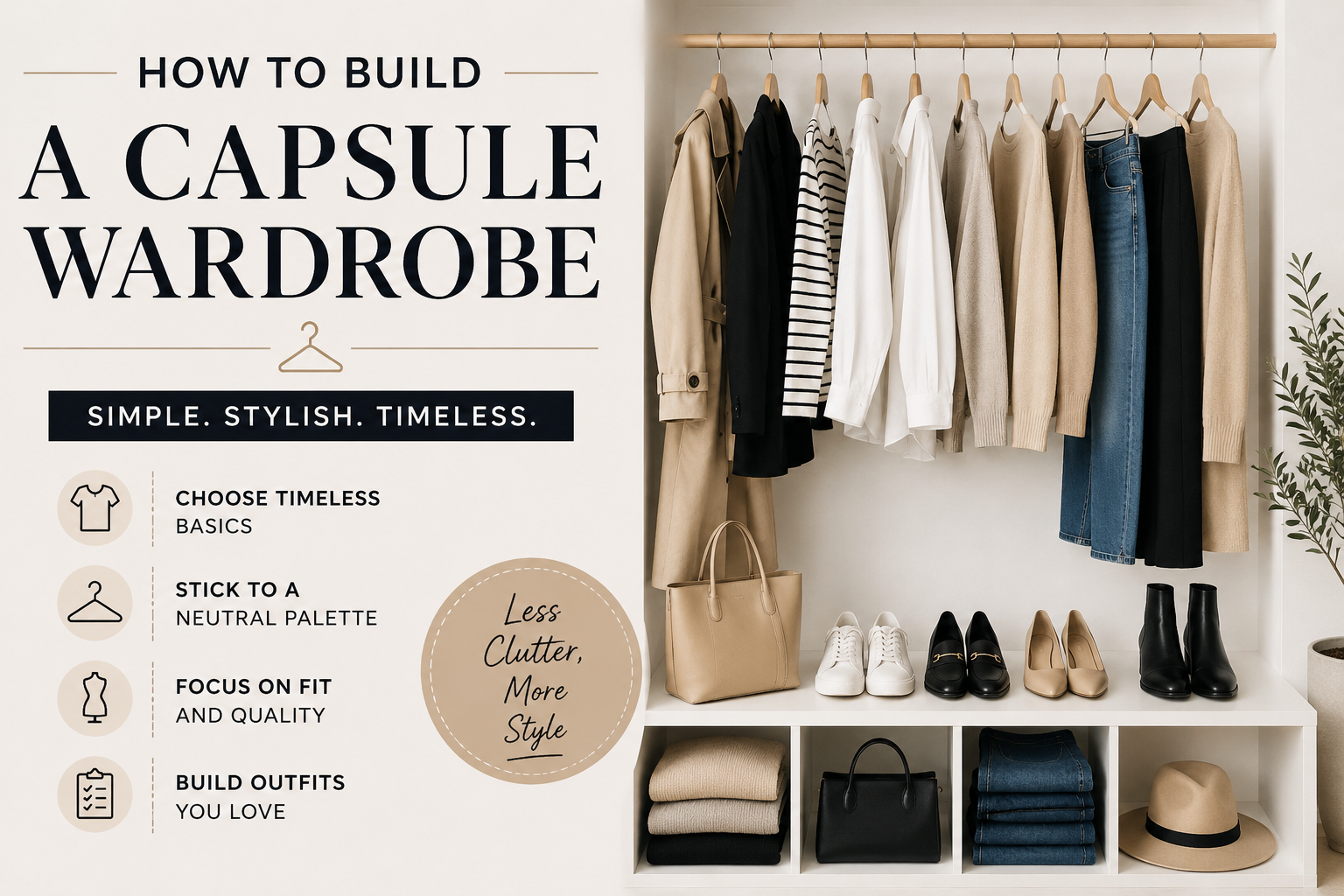
Once you understand how to dress for your body type, the goal is to build a capsule wardrobe around your most flattering silhouettes:
- Identify 3–5 outfit formulas that consistently work for your shape.
- Invest in basics (well-fitting trousers, classic tops, a tailored blazer) before trends.
- Shop with intention — before buying, ask: does this work for my body type?
Final Thoughts
Knowing how to dress for your body type isn’t about restriction — it’s about freedom. When you understand what works, getting dressed becomes easier, faster, and far more enjoyable. You stop wasting money on pieces that never quite feel right, and you start building a wardrobe that consistently makes you feel your best.
Your body type is not a flaw to be corrected. It’s a starting point for creating a style that is uniquely, authentically yours.